Epoxy vs Polyaspartic Coatings: Which Is Right for Your Garage?
Choosing between epoxy and polyaspartic coatings? Both are excellent options for Sacramento garages, but they have important differences in cure time, durability, and cost.
The Quick Answer (Then the Nuance)
For Sacramento garages specifically? I almost always recommend a hybrid system - epoxy base with polyaspartic topcoat. Here's why, and when the exceptions apply.
| What Matters | Epoxy | Polyaspartic |
|---|---|---|
| Full Cure | 5-7 days for vehicle traffic | 24 hours for vehicle traffic |
| Hot Tire Resistance | Needs polyaspartic topcoat | Excellent out of the box |
| UV Yellowing | Yes, amines yellow in sun | No - aliphatic chemistry stays clear |
| Chemical Resistance | Excellent (better for oil, solvents) | Very good |
| Film Build | 8-12 mils/coat - thick and forgiving | 3-5 mils/coat - thinner, needs more coats |
| Cost (installed) | $4.50-$7/sq ft | $6-$9/sq ft |
| Lifespan | 15-20+ years | 15-20+ years |
Epoxy: The Workhorse We've Used for 30 Years
100% solids epoxy is still the gold standard for building film thickness. It's a two-part system (resin + amine hardener) that creates an incredibly hard, chemically-resistant surface. When I started in this trade, epoxy was all we had, and floors from the '90s are still holding up.
Where Epoxy Shines
- Thick builds:I can put down 10-12 mils in a single coat. That's real armor for your concrete.
- Chemical resistance: Brake fluid, transmission fluid, gasoline - epoxy laughs at them. Critical for shops and commercial spaces.
- Cost: Lower material cost means 15-25% savings versus full polyaspartic.
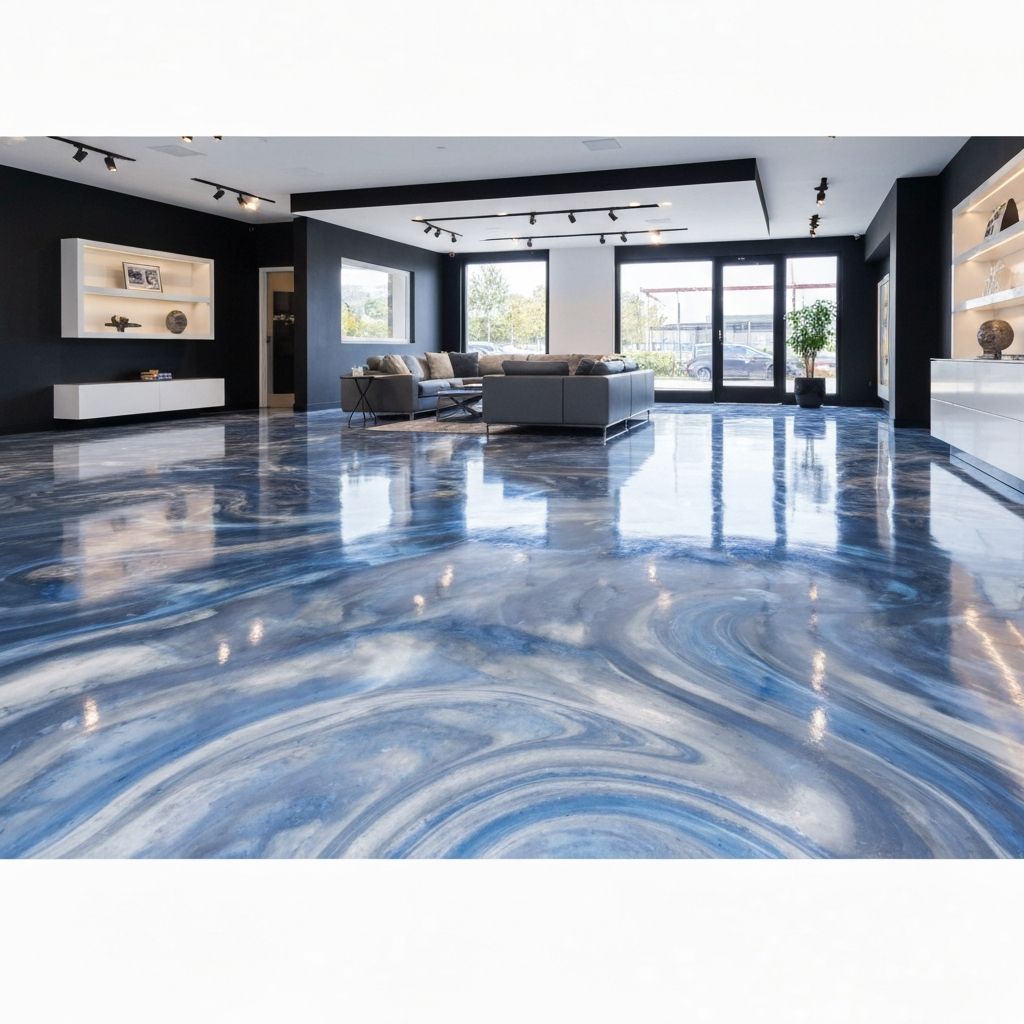
- Design options: Solid colors, vinyl flake, quartz broadcast, and metallic effects - all work beautifully with epoxy.
The Honest Downsides
- • Yellowing: Amine hardeners are UV-sensitive. Your clear coat will amber over time if it gets sun. Not a structural issue, but cosmetic.
- • Hot tire pickup: Standard epoxy softens around 140-160°F. Sacramento summer tires exceed that easily.
- • Temperature sensitivity: Can't apply below 50°F or above 90°F. Limits our winter and summer install windows.
- • Long cure: Walk-on in 24 hours, but no vehicles for 5-7 days. That's a week without your garage.
Polyaspartic: The Modern Solution
Polyaspartic is a type of aliphatic polyurea. It was developed in the '90s specifically to solve epoxy's weaknesses - UV stability, temperature range, and cure speed. The trade-off is cost and film thickness.
Where Polyaspartic Wins
- Same-day or next-day return:Fully cured in 4-6 hours. Drive on it tomorrow. This is huge for people who can't lose their garage for a week.
- UV stable:Aliphatic chemistry doesn't yellow. Period. Ten years from now, it looks the same.
- Hot tire resistant: Stays hard up to 200°F+. Sacramento summers are a non-issue.
- All-weather install: Can apply in temps from -20°F to 120°F. I can work year-round.
The Honest Downsides
- • Cost: Material is 2-3x the price of epoxy. That passes through to you.
- • Thin coats: 3-5 mils max per coat. Need multiple coats to build thickness.
- • Unforgiving application: Fast cure means fast mistakes. Requires experienced crews - rookies will mess it up.
- • Slightly less chemical resistance: Still very good, but epoxy edges it out for heavy industrial.
What I Actually Recommend for Sacramento
For 80% of residential garages in our area, I spec a hybrid system:
- • Diamond grind to CSP-3
- • 100% solids epoxy primer/basecoat (8-10 mils)
- • Decorative flake broadcast
- • Polyaspartic topcoat (3-4 mils)
You get the film build and chemical resistance of epoxy, with the UV stability and hot tire protection of polyaspartic. Best of both worlds. Total cure time is 2-3 days - a compromise between full epoxy (7 days) and full polyaspartic (1 day).
When to Go Full Polyaspartic
I recommend pure polyaspartic (typically 3-4 coats) when:
- • You absolutely cannot be without your garage for more than 24 hours
- • The floor gets direct sunlight (no garage door, or you leave it open)
- • It's a showroom or space where appearance is everything
- • Budget isn't the primary concern
When to Go Full Epoxy
I'll do straight epoxy (with UV-stable clear if needed) when:
- • It's a shop or commercial space with serious chemical exposure
- • Budget is tight and you can wait the full cure time
- • The space doesn't get sun and won't see hot tires (workshop, basement)
- • You're doing a metallic floor (metallics need the slower cure to develop properly)
Let's Figure Out What Your Floor Needs
This article gives you the framework, but every garage is different. Your concrete condition, sun exposure, how you use the space, your timeline - it all factors in. I'm happy to come out, look at what you've got, and give you a straight recommendation.